

Key Takeaways
- Meaningful activities support emotional well-being and reduce anxiety in those living with dementia.
- Sensory, creative, and movement-based activities can be done simply at home.
- Social connection through games, music, and reminiscing brings joy and a sense of belonging.
- Caregivers can make activity time more positive by staying flexible and following their loved one’s lead.
- Memory care communities offer structured daily programs designed around individual needs and dignity.
Why Activity Still Matters for Your Loved One
It’s difficult watching someone you love navigate dementia, and it’s even harder to stand idly by. You want to reach them, connect with them, and bring a smile onto their face, but it’s not always clear how.
The journey of caregiving is often made smoother with knowledge. When it comes to caring for seniors with dementia, many caregivers are surprised to find that even small, simple activities can be the key to rekindling your loved one’s joy.
For seniors living with dementia, the right activities can support emotional health, ease anxiety, and establish a sense of purpose. Don’t worry if they’re not the most elaborate or if they’re not perfect. What we strive for in these activities is consistency and familiarity.
Why Meaningful Activities Matter in Memory Care
For those living with dementia, the world can feel alien. That’s why anchors, like routines and structure, are vital. Familiar activities, even small ones, bring seniors with cognitive conditions a sense of comfort and reintroduce them to a life that they know.
Engagement also fosters a sense of purpose. Old age and memory issues do not overshadow their aspirations or their sense of mission. Thoughtfully chosen activities can satisfy these deeper, internal needs. Don’t be afraid to explore games and activities designed for seniors with dementia to find options that fit where your loved one is right now.
Simple and Calming Activities to Try
Sensory and Creative Options
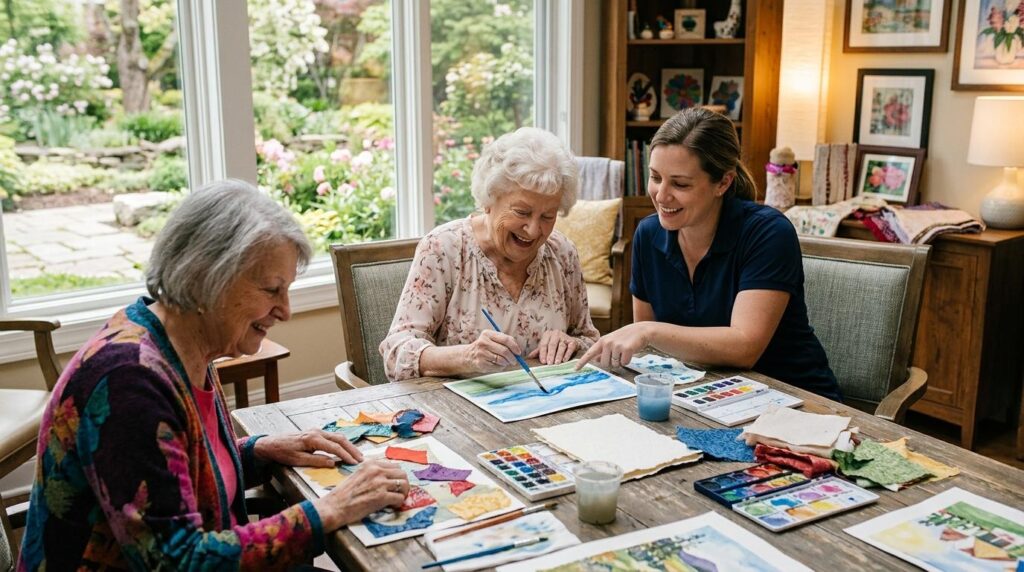
Our five senses are a gateway to our minds. Sensory experiences, like hearing gentle music from a familiar era or working on soft art projects, can help improve quality of life for those with dementia. These activities are also easier on both you and your loved one since they don’t require much instruction.
Familiar scents and textures can also spark positive memories in unexpected ways. There’s a certain subtle joy in seeing a loved one smile at objects tied to their past. Keep sessions short, around 15 to 20 minutes, and let your loved one set the pace.
There are many activities shared by other caregivers that you can take inspiration from. As a starting point, you can try introducing puzzles and trivia games into your loved one’s routine. They’re a gentle option that boosts mood and encourages social connection.
Movement and Outdoor Time
Motion is lotion when you pick exercises of the right intensity. A slow walk around the yard, supported stretches, or simple hand movements all support physical health. A healthy mind needs an equally healthy body to thrive.
Taking in some fresh air can also lift your loved one’s mood. Simply sitting outside together and noticing the sounds of birds chirping can be grounding. These small blessings granted by nature can mean a lot to those receiving them.
Social Activities That Support Connection
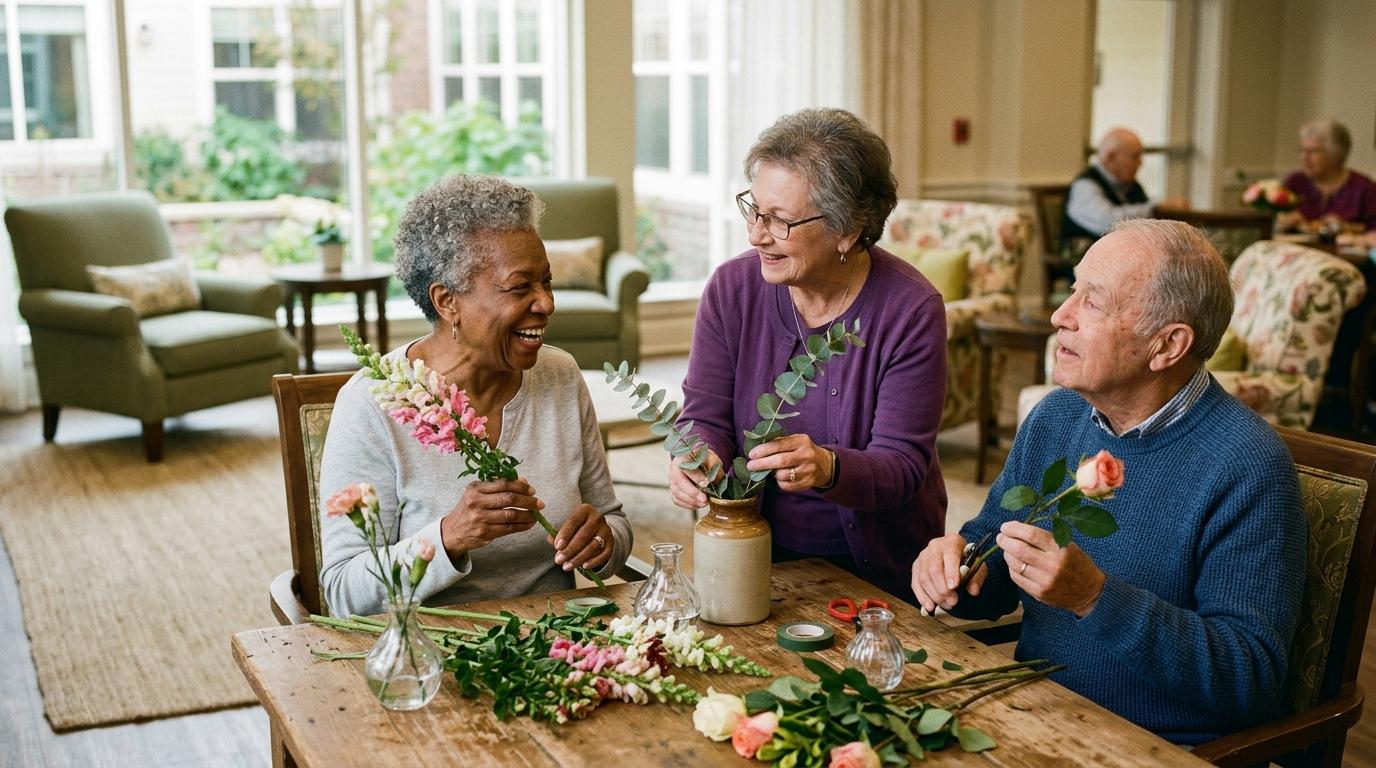
Isolation is quiet, but that doesn’t mean it’s not harmful. Social life is the door to happiness, especially in old age. A round of card games with friends or a light conversation over hot coffee can mean more to your loved one than you might think. These interactions help seniors stay socially connected. You can always count on a fulfilled social life to help reduce stress for seniors with memory loss.
Reminiscing with old photos is another meaningful option. Albums are a vessel for stories, laughter, and a sense of identity. Don’t mind if your loved one couldn’t get all the correct details. It’s the moment that matters.
Tips for Caregivers During Activity Time
How to Keep Things Positive
Instead of trying to guide your loved one, follow their lead. If they seem drawn to something, lean into it. If they lose interest, move on to the next activity. Flexibility is what allows both you and them to take in all the joys of the present. You may consider reading up on tips for communicating with individuals with dementia. Care and compassion are best practiced when paired with knowledge.
Also, try celebrating every moment with your loved one and every step they take. Acknowledge that smile at an old photo or that comment about a color in a painting. These responses deserve a sincere reply.
When to Adjust the Activity
There isn’t a single activity that can keep someone engaged forever. Pay attention to signs of fatigue, like restlessness, mood shifts, or disengagement. These are signs that it’s time to wrap things up.
As an alternative, switch to something quieter, like listening to soft music or sitting together outdoors. The goal of these activities is to bring comfort. Being pushy and forceful about them can only bring us further away from that.
Memory Care at Boden Senior Living in Maplewood
It’s natural for seniors with dementia to have needs that shift over time. When their needs change, care evolves alongside it. This means new activities, new routines, or sometimes a new style of communication. This can often prove to be difficult for even the best caregivers.
We at Boden Senior Living in Maplewood understand that dementia can be hard on both caregivers and their loved ones. That’s why our team is determined to care for our residents with more than just compassion. Our experience with care gives us the flexibility needed to arrange activities for seniors at any stage of memory loss.
You don’t have to shoulder the weight of caregiving alone. Contact us today to learn more about how we can help your loved ones with the right activities and the right care.